
A vast majority of active job seekers now turn to conversational AI tools like ChatGPT, Perplexity, and Claude to find their next career opportunity. Rather than endlessly browsing traditional job boards, candidates type specific prompts such as: “Find me remote programmatic advertising roles paying over $120,000 with flexible hours.”
If your talent acquisition strategy relies strictly on legacy job portals and basic career pages, your open positions are likely hidden from these conversational AI search engines. When conversational AI platforms scan the web for real-time information, they evaluate sites based on search permissions, structured content clarity, semantic relevance, and data indexing.
Here is a breakdown of why your open vacancies might be getting passed over by AI search engines, along with actionable steps to make your requisitions discoverable.
Why Open Roles Become Invisible to AI Search Tools
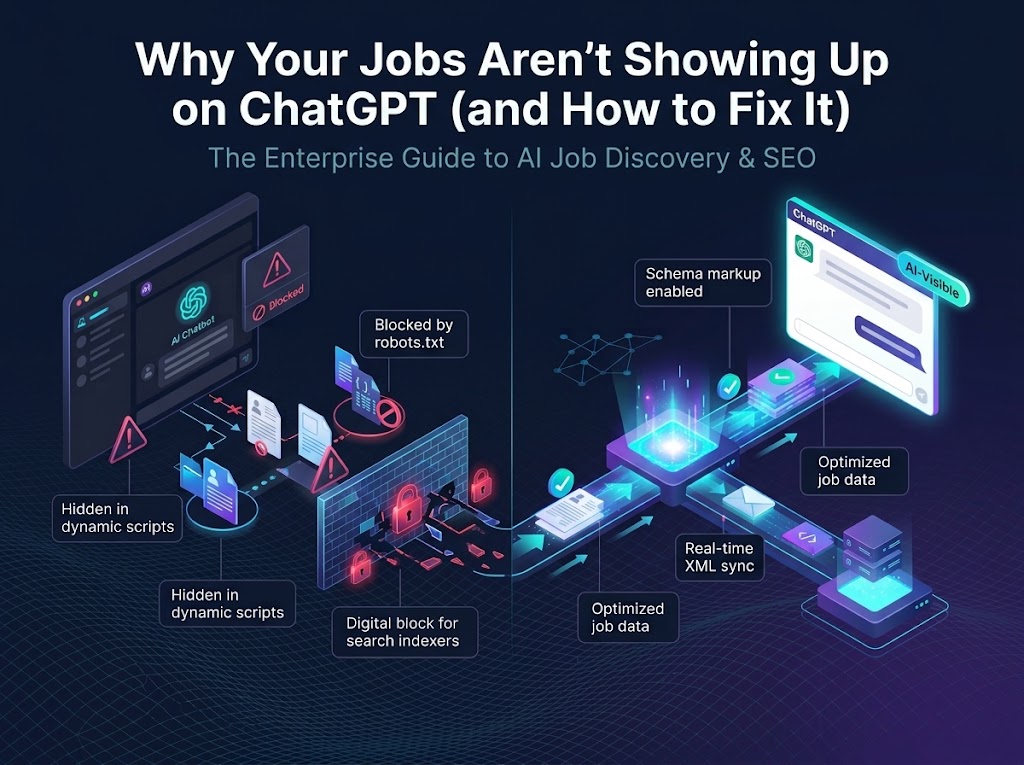
Conversational AI platforms choose which job listings to reference based on technical accessibility, clarity of information, and role relevance. Most enterprise hiring portals run into five common obstacles:
1. Blocked Search Crawlers
Many enterprise IT security policies block web crawlers to protect internal site assets. However, blocking these bots prevents conversational AI platforms from discovering, reading, and listing your active job vacancies.
2. Dynamic JavaScript and Framed Portals
Many Applicant Tracking Systems (ATS) load job listings using dynamic scripts or embedded frames. While human visitors can view these pages seamlessly, automated search bots often read static page structures. If your job posts require client-side scripts to display text, search agents see an empty page.
3. Missing Standard Job Metadata
Search engines and language models require clear background tags to read role details accurately without guessing. Without standard metadata embedded in your site structure, AI platforms cannot reliably pull essential facts like salary, location, employment type, or application deadlines.
4. Vague or Non-Standard Job Titles
AI models rely on intent matching and standardized career taxonomies. Creative titles like “Marketing Ninja” or “Growth Superhero” rank poorly compared to standardized industry titles like “Senior Digital Marketing Manager”.
5. Isolated Recruitment Databases
Vacancies stored in disconnected applicant tracking systems without indexable XML feeds or multi-channel distribution networks fail to reach the wider web index scanned by conversational AI engines.
Practical Steps to Boost Your AI Search Visibility
To make your job openings discoverable, readable, and recommended by conversational search tools, implement this structured approach.
Step 1: Open Career Pages to Search Indexers
Coordinate with your web management team to verify that search engine crawlers have permission to access your job listing folders. Maintaining an up-to-date sitemap ensures search agents instantly spot new requisitions as soon as they open.
Step 2: Add Clear Job Metadata to Your Career Pages
Incorporate standard job schema details into the backend structure of every job page. Key details to include are:
- Standard Job Title: Clear, industry-recognized position names.
- Hiring Organization: Confirms your brand authority.
- Work Location: Specific city, state, or remote options.
- Salary Range: Clear compensation parameters for candidate prompts.
- Key Qualifications: Explicit skill lists that feed matching algorithms.
- Expiration Date: Prevents search engines from recommending closed roles.
Step 3: Write Direct, Well-Structured Descriptions
AI models favor direct, easily scannable details over long narrative paragraphs.
- Lead with Core Facts: Place salary, location, and experience requirements at the very top of the job description.
- Organize Requirements Clearly: Use explicit headers to separate mandatory qualifications from optional skills.
- Use Recognized Skill Terms: Use specific industry terminology (e.g., “Demand-Side Platforms, CPA Bidding, Google Analytics”) rather than vague phrases like “experienced in advertising tools”.
Step 4: Use Dedicated, Static URLs for Every Position
Ensure every open job has its own unique, permanent web address. Avoid temporary session links or pop-up modal windows that prevent search indexers from referencing the specific vacancy.
Step 5: Automate Distribution via Multi-Channel Job Feeds
Manually updating individual job boards limits your reach. Utilizing an automated programmatic advertising platform, such as Sourcing Square, transforms your ATS requisitions into indexable job feeds. This distributes your openings across hundreds of publisher networks, giving AI agents multiple verified sources to discover and cite your roles.
Measuring Your AI Job Search Footprint
Once your technical updates are in place, monitor your performance across these key areas:
- Perform Regular Prompt Audits: Test relevant career prompts on popular conversational AI tools to see if your openings appear in recommendations.
- Monitor Referral Traffic: Use site analytics tools to track incoming visitor traffic originating from AI conversational domains.
- Track Search Indexing Status: Regularly verify through Search Console tools that your individual job pages are fully indexed without structural errors.
As job search shifts toward conversational AI platforms, ensuring your positions are discoverable, indexable, and well-structured is essential. Talent acquisition teams that refine their career page architecture and job distribution strategies today will gain a decisive advantage in attracting top-tier talent.
Ready to transform your recruitment ad spend and make your job inventory AI-ready? Book a live demo with Sourcing Square.